
How Daylilies – Hemerocallis - became the Ultimate Climate Proof Perennial
Lets face it, with today’s ever more unpredictable and wildly varying weather patterns becoming the new norm, gardening can be a bit of a challenge. Plants which prefer moisture grow lushly one season and wither in the drought the next. Sunshine lovers might be basking one minute and sulking the next. Some species’ never before thought of as hardy are suddenly establishing themselves country wide, only to be hammered the next winter. If our gardens don’t know whether they’re coming or going, we the custodians certainly don’t.
And being honest we’ve all been guilty of buying impromptu from Garden Centres displaying brand new and very tempting plants only to find they disappoint a few months down the line [stand up the wonderful looking hybrid Echinacea’s none of which I have found to be long lived]
So the hunt has been on for a while for plants that can cope with these extremes. Stand up the Daylily for surely there has never been a plant that can thrive whatever is thrown at it. Varieties like the famous ‘Stella d’Oro’ are immensely popular in gardens on virtually every continent. So lets get to the bottom of quite why the Daylily is such a foolproof garden plant shall we?
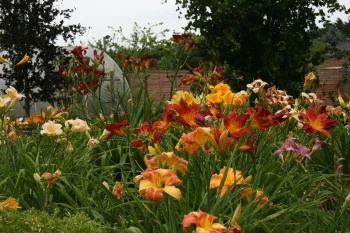
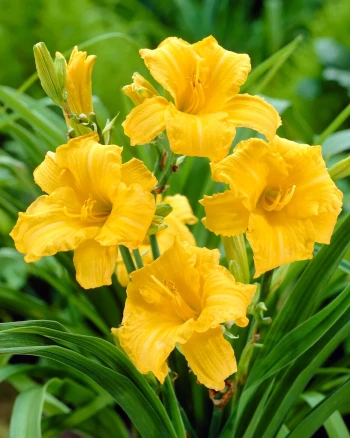
Today’s almost limitless palette and variety range were all derived from a small and humble selection of species which grow wild in China, Japan, Korea and Mongolia. Their pedigree therefore for being able to withstand severe cold is without question. The first hybridizers started working with those species over 100 years ago. Impossible to think that this humble race of plants has been developed so painstakingly into today’s rainbow of varying colours and forms because they were originally all yellow! But just for once the intensive cross breeding and hybridizing of this once humble plant hasn’t resulted in any loss of the cast iron hardy constitution of the original species’ at all.
Daylily breeding and the enthusiasts that appreciate them is a global gardening phenomenon with hybridizers as far flung as Northern Europe, Florida and much of America, Australia Germany and even Hawaii. As a garden plant they are popular in all those places as well as across all of Europe, Norway and of course Asia.
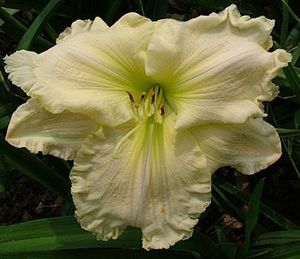
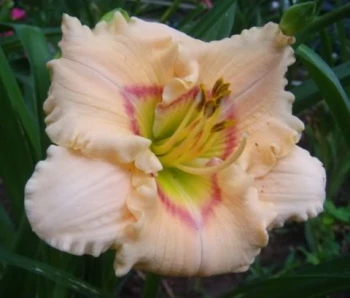
It was never in doubt that they would withstand severe frost but they are very happy with the thermometers other extreme – heat as well brought about no doubt by developments in breeding in hotter climates. Hence their burgeoning popularity in places with summers much hotter than our own. There are any number of Daylily hybridizers in and around Florida and Los Angeles. Florida is represented by my own favourite breeder, Dan Hansen who continues to represent the boundary-pushing cutting edge of Hybridizing and many of his varieties have found a home on my Nursery and do very well minus the Florida heat and Humidity such as the showy Tuscawilla Tigress and huge white Tuscawilla Snowdrift. The late great Scott Alexandra had a Daylily nursery of great renown in Australia and raised several globally recognised varieties such as Maleny Debutante , Maleny Chantilly Lace and the internationally famous ‘Booroobin Magic’ with it’s fantastic dark ey and edge. There was even a Daylily nursery in Hawaii for many years run by Guy Pearce. In the Northern Hemisphere Germany is represented by the Tambergs who raised the popular Helle Berlinerin. Dutch Breeder Heemskerk has bred many continentally successful varieties, Matroushka proving especially popular in Northern Europe. Therefore their tolerance of heat has come about by being bred in such varying climates many of them warmer than our own. We’ve already discussed their severe frost tolerance.
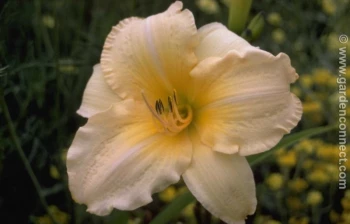
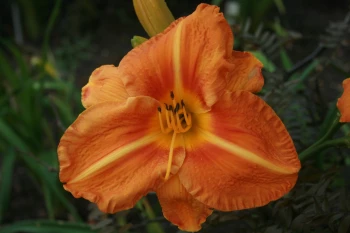
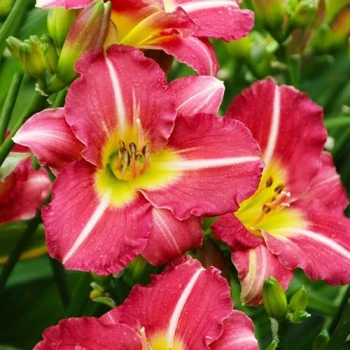
But what about their drought resistance?
How come can the Daylily withstand drought? It’s because their root system is partly rhizamotous. These are fleshy roots which store water for use when needed, so when things dry up the plant has reserves to draw on to see it through. You can see these paler fleshy roots quite plainly whenever you dig a Hemerocallis clump up, or plant new ones in your garden or patio pot.
That said no plants are happier on moisture retentive to even wet soils. Daylilies do well in sticky cold clay as well as well drained soils and anything inbetween. Some species such as Hemerocallis fulva will colonise ditches where water can sit for brief periods and they grow very lushly. Daylilies therefore make good waterside plants where the roots won’t be ‘sitting’ in water for long periods.
Daylily Foliage types and hardiness – dispelling the myth.
It was once thought that the true dormant varieties were by far the hardiest but that theory has largely been discounted. Varieties which are dormant such as Mikado retreat to below ground over winter leaving no foliage above it at all, regenerating anew in the Spring as the soil temperatures warm. Semi Evergreen and Evergreen varieties like the popular Moonlit Masquerade maintain varying degrees of foliage over winter depending on temperature but will always keep at least some leaf above ground.
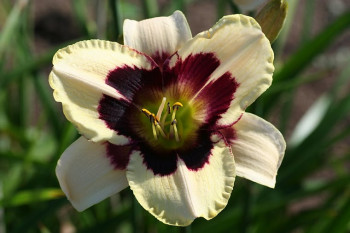
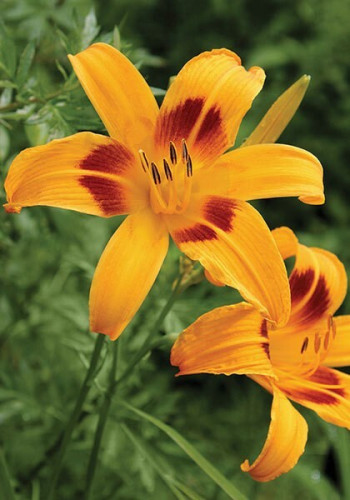
As breeding programmes in warmer countries increased so did the decline in dormants with very few new varieties being released classed as truly dormant. It is mostly the older varieties that have dormant foliage. Additionally, these days most professional Daylily hybridizers concentrate their efforts on Tetraplpoid parents with their improved texture, form and lasting qualitied and these seem often to fall in to the semi evergreen lor evergreen foliage types.
It was an assumption that they would be less hardy but this not the case. Although they react to the severity – or otherwise – of over winter frosts, the plant itself remains steadfastly hardy.
Many years ago I was warned about buying plants from so called Southern hybridizers such as those in Florida citing hardiness doubts. I must have imported thousands of stock plants over many years from such places – I have never lost one through hardiness and the same has been reported from other Daylily specialists such as Polly Maasz and Jan and Andy Wyers [the latter sadly no longer trading]
These are the many reasons why Daylilies [Hemerocallis] are unquestionably such a sound investment for your garden with many weeks of fascinating colour, endless variety of form, patterning and colour, all within a plant that boasts cast iron hardy constitution and an indomitable spirit to perform and please no matter what the conditions may be.
I can think of no better way to sum this article up than by going back to Australia’s late great Daylily luminary Scott Alexander – he was a character – with this quote from him which caused some controversy at the time but remains truly and succinctly put ….
If you can kill a Daylily you should give up gardening!