
Extending The Daylily Bloom Season
So you’re a member of the Daylily addict club. It’s September, the summer is waning – and so are the Daylilies. Just a few treasured blooms are left. You’re wondering how you’re going to exist and get up in the morning until the end of next June when the first varieties begin to bloom again. How do you go all that time without your Daylily fix?
Happily, I have a couple of tips on how to get glorious Hemerocallis blooms from April right through until nearly Christmas. Yes, this really is possible with some forward planning.
Let me explain……
A few years ago, I was privileged to be commissioned to supply some Daylilies in bloom for the Chelsea Flower Show. Chelsea normally runs around the middle-third week in May. Around 6 weeks earlier than the Daylilies’ natural bloom season begins. So I began prepping early – probably earlier than was necessary as it turned out. This was the middle of January.
I lifted some mature and semi-mature clumps and cut back any remaining foliage to within a couple of inches of the base. This tidies them up, encourages new growth and removes any lingering pests or diseases. They were then potted into containers just big enough to take the roots [some were root pruned where they were just a bit too monstrous] potted them with some fresh loam-based compost, John Innes No. 3. You can use coir or multi-purpose, but I like the added texture and body of loam-based, and it makes watering easier as it is more moisture and nutrient-retentive.
I must have potted around 40 clumps as added security, and they went into a large greenhouse which was kept to around 60degrees nighttime and a comfortable 65 degrees during the day. Such a scale may be beyond the average gardener, but you can cut your cloth, so to speak. Even just a few pots in a small greenhouse or conservatory will give you joy. You just need to earmark a few clumps in the garden, you can be strong-willed enough to lift or maybe acquire some plants specially for the purpose. Obviously, the more mature they are, the more flowers you will get. To maximise the season, I would recommend choosing early flowering varieties for preference – but I included some mid-season ones that bloomed in plenty of time for Chelsea as well.
I fed these plants fortnightly with a weak foliar feed, but I didn’t do anything else other than remove the odd intrepid slug who had hitched a ride.
When the plants begin to bloom, dead-heading is especially important. As the atmosphere inside is generally more humid and air circulation is poorer, mould can appear on spent blooms a few days afterwards.
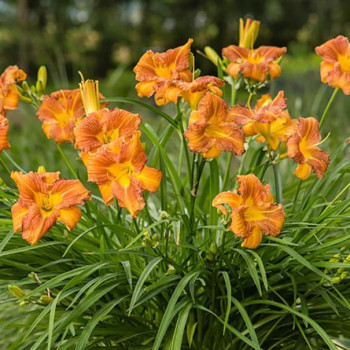
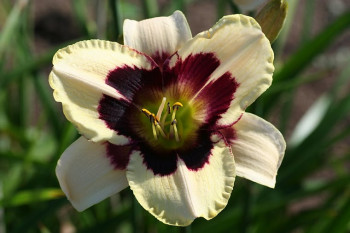
The first blooms began to open in the 3rd week of April! A large, large white called Tuscawilla Snowdrift, as I recall, followed closely by ‘Bold Black Eye’ with its big amber coloured flowers with a huge black eye and the sultry, almost charcoal purple of Tuxedo. and soon a whole host of others.
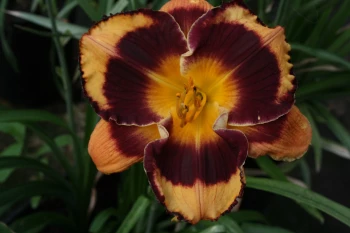
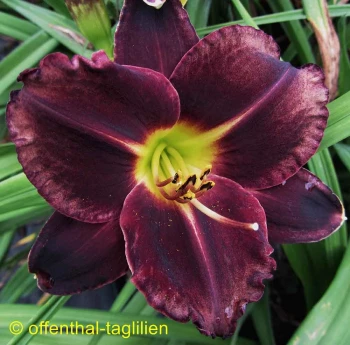
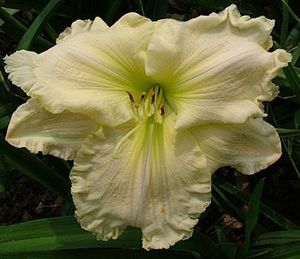
You can enjoy them in the greenhouse or conservatory, or move them out onto the patio for outdoor display as the weather will be improving then, just make sure they don’t get caught by a late frost. Late frosts, of course, don’t harm Daylilies when they are grown outside, but these plants that have been gently forced indoors will be ‘soft’, and it may damage the flowers and buds.
The garden designer was over the moon, and they looked great in his Silver Medal-winning display. I was chuffed to bits and so was he. It was a real privilege for me, and also gave me considerable satisfaction that what was really a bit of a learning curve had come off so well. Now I habitually do the same each year, albeit on a smaller scale, just for my own pleasure. January is a quiet time in the Nursery, so there’s always time.
With the cost of heating ever more expensive, you might think this is impractical for you to do, although, as a keen gardener, you may already be heating a greenhouse for early seedlings and houseplants. But if not, even brought in early without any heat at all, you will get earlier blooms than would normally be the case, as the temperatures will rise during sunnier days and bring them into growth and flower earlier than would be normal, so this would still be worthwhile.
Here’s a tip: It is important that the plants intended for the purpose of forcing are left outside during the first half of winter. This is important as they need a rest period. The effects of frost and snow will harden the plants and make sure they bloom as temperatures increase. A lot of varieties won’t bloom well if they don’t have at least some winter treatment.
At the other end of the season, as Autumn begins to take hold, it is also more than possible to extend the natural bloom season of the Daylily. Here we concentrate on varieties that are naturally strong re-bloomers – varieties that produce secondary or even a third lot of flower scapes [stems] after the main flush. The practice involves cutting the selected varieties back to a couple of inches in August to rejuvenate them and promote new growth. Pot them as described above and provide the same sort of temperatures. Try to choose the most well-lit area of the glasshouse or conservatory, as remember the daylight length will begin to shorten, and the plants will appreciate as much light as possible. If you really want to push the boat out, you can provide additional grow lights.
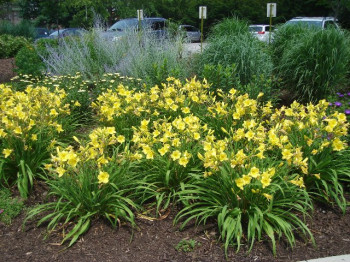
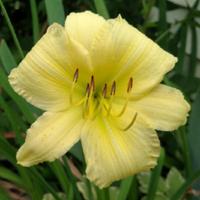
Strongly re-blooming varieties that are recommended include Happy Returns with its modest but lovely pure yellow flowers. The first class, deeper-eyed ‘Jason Salter’, Majestic purple on white Moonlit Masquerade. Purple D’oro in the deeper purple shades. And Everydaylily Bronze or Everydaylily Rose have done very well with this treatment too, as well as ‘Big Time Happy’ with its larger soft yellow scented flowers, which is definitely one to include. But there are many more. You can probably keep these going well into the run-up to Christmas.

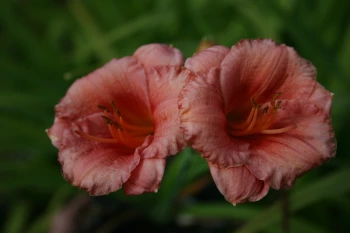
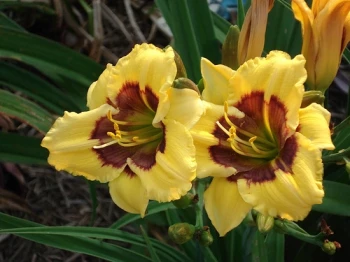
Any plants you choose to utilize in this way can be returned to the garden and planted out again, or you can keep them in their containers to use them in this way again and again – just remember to re-pot and rejuvenate each season prior to moving them into gentle heat.
So there we do – with some forethought and a little work, you can have Daylilies in bloom for a good 9 months of the year. I hope this article has inspired you, and let me know how you get on.
John.
Swallowtail Daylilies.